Contact Us
 321-309-6900


EP: 339
Optimizing Home Builder Brands for AI Visibility
With Daneila Pedroza

Home builders face a unique SEO challenge: your buyers search by city, community, school district, and price range, not just by keyword. If your communities and floor plans aren't showing up in Google, local map results, and AI-powered search tools like ChatGPT and Google AI Overviews, you're losing qualified traffic to competitors who are. Blue Tangerine's SEO and GEO strategies are built specifically for how home buyers search and how builders operate. We help you rank higher, show up in AI-generated answers, and turn online visibility into qualified leads. Blue Tangerine provides SEO and GEO for builder websites on any platform, including sites built and maintained by other companies.
We help home builders:
Our SEO clients typically see measurable improvements in organic visibility within 60 to 90 days.
See how AI is changing home builder SEO and what it means for your visibility, and learn more about the common SEO challenges home builders face and how to address them.
Yes. Blue Tangerine works exclusively with residential home builders and has done so for more than 20 years. Every SEO and GEO strategy is built around how home buyers search for new construction and how builders organize and sell their product, which differs substantially from how search works in other industries. Blue Tangerine does not serve other verticals, so the entire program is shaped by builder search behavior.
The program is designed for production builders, semi-custom builders, and regional or multi-market builders.
Home buyers searching for new construction follow patterns specific to the category:
This is purpose-built home builder SEO rather than generic agency SEO applied to a builder website.
No. Blue Tangerine's SEO and GEO services are sold separately from website design and development. A home builder can hire Blue Tangerine for SEO and GEO while keeping their current website, and many Blue Tangerine SEO clients are on websites built and maintained by other companies.
Most of the work is fully deliverable on any platform. Keyword and market strategy, content development, community and floor plan page optimization, local search and Google Business Profile optimization, link acquisition, passage-level GEO optimization, and AI citation tracking do not depend on who built the website.
Structural changes are the exception. Schema markup, URL structure, internal linking architecture, page templates, and site speed improvements sometimes require access that only the current platform vendor has. On those items Blue Tangerine works through the builder's existing developer, which can add time. Blue Tangerine identifies exactly which recommendations fall into this category during the initial audit, so the builder knows up front what can move immediately and what depends on their vendor.
Builders on BuilderBase, Blue Tangerine's website platform, get faster implementation on structural work because the same company controls the platform and the SEO. That is a difference in speed, not in strategy or scope. Builders on other platforms receive the same program.
Home builder SEO has to support layered geographic and inventory-driven searches, which most SEO programs are not built to handle. A builder's product is organized by market, community, floor plan, and available home, and each of those levels has to be findable on its own. Traditional SEO optimizes individual pages. Home builder SEO makes an entire location and inventory hierarchy legible to search engines and AI systems.
Buyers search at several distinct levels:
Blue Tangerine structures the website around a clear hierarchy of state, market, community, and floor plan. That structure improves traditional rankings, improves local map visibility, and increases the likelihood that AI systems cite the builder's own pages rather than a third-party listing portal.
Generative Engine Optimization, or GEO, is the practice of structuring content so AI systems can find it, understand it, and cite it inside a generated answer. It matters for home builders because a growing share of buyers now ask an AI assistant instead of scanning a list of links, and an AI answer that does not mention the builder removes that builder from consideration entirely. GEO is about being included in the answer, not about ranking above a competitor in a list.
Buyers ask AI systems questions like:
AI systems handle these differently from a traditional search engine. They break one question into multiple sub-queries, retrieve individual passages rather than whole pages, and synthesize an answer from several sources at once. Content written as one long narrative is hard to retrieve. Content organized into clear, self-contained, factually specific passages is far easier to cite.
Blue Tangerine structures community pages, floor plan pages, and educational content so each passage stands on its own, names entities clearly, and answers a specific question directly. That work improves visibility across Google AI Overviews, Google AI Mode, ChatGPT, Perplexity, Microsoft Copilot, and Claude.
The Home Builder SEO program covers four areas: technical foundation, community and floor plan optimization, local market visibility, and GEO optimization. Every engagement includes all four, scaled to the number of active communities and markets the builder operates in. Technical problems are addressed first, because crawling and indexation issues limit what the rest of the program can produce.
Technical foundation covers crawlability and indexation, Core Web Vitals, structured data, and internal linking architecture.
Community and floor plan optimization covers city and community keyword modifiers, school district associations, amenity and lifestyle entities, and FAQ content structured for extraction in AI summaries.
Local market visibility covers Google Business Profile optimization, market-level landing pages, citation consistency, and geographic schema implementation.
GEO optimization covers passage-level clarity, semantic coverage, query fan-out support, and AI citation tracking.
Every part of the program is aligned around generating qualified homebuyer inquiries rather than rankings on their own.
Early improvements typically appear within 60 to 90 days, and sustained growth usually builds over 4 to 9 months. The first gains come from technical corrections and community page optimization, which resolve problems already limiting visibility on pages that exist today. Longer-term growth depends on building authority and content depth, which compounds over time rather than arriving all at once.
The first 60 to 90 days generally produce results from:
The pace of sustained growth depends on:
Home builder SEO compounds, which means the gap between a builder who started two years ago and one who started last month tends to widen rather than close. This is most pronounced in competitive metros.
Paid media and SEO do different jobs, and the strongest builders run both. Paid search rents traffic and stops producing the moment the budget stops. SEO and GEO build market equity that keeps generating inquiries between campaigns and through budget reductions. The case for SEO isn't that it replaces paid search, but that it reduces how much the builder depends on it.
SEO and GEO produce several things paid media cannot:
As AI summaries absorb more traditional clicks, builders with strong organic and GEO foundations keep their visibility even when paid performance fluctuates.
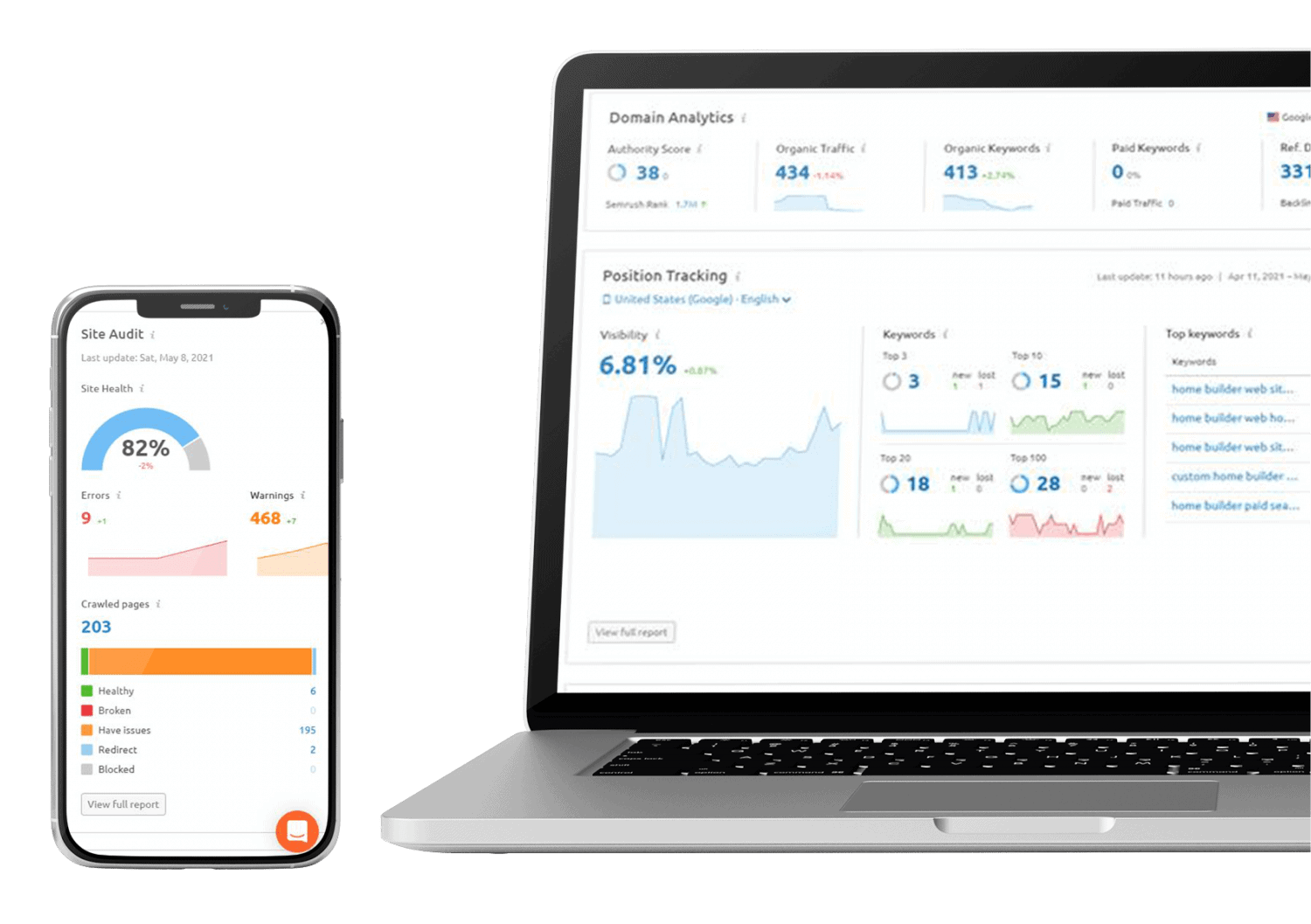
Blue Tangerine measures SEO performance in three areas: visibility, lead generation, and revenue efficiency. Rankings alone are not treated as the outcome, because a builder can rank well and still generate few qualified inquiries. Reporting connects search visibility to inquiries and then to cost, so performance can be evaluated in terms the business already uses.
Visibility is measured through market-level keyword growth, community coverage across active communities, and AI citation presence.
Lead generation is measured through organic form fills, call tracking, and appointment requests.
Revenue efficiency is measured through cost per organic lead, market-by-market performance, and reduced paid media dependency.
The program is measured by qualified homebuyer inquiries, not rankings alone.
Connect with Our Team


Paid Search
Google and Microsoft paid search campaigns built specifically for home builders. We target buyers actively searching for new homes, communities, and floor plans in your markets, driving qualified traffic and converting more visitors into leads.
Social Media
Social media programs that connect home builders with buyers on Facebook, Instagram, and beyond. From community launches to model home promotions, our campaigns build awareness, generate interest, and move buyers closer to a purchase decision.
Geofencing
Targeted digital ads delivered to potential buyers based on their physical location, reaching people near your communities, competitor sales centers, and high-traffic areas. One of the most precise tools available for driving foot traffic to your model homes and sales centers.

Email Marketing
Email marketing programs that keep your brand in front of prospective buyers throughout their home search journey. From initial interest to contract signing, strategic nurture campaigns help builders stay connected, build trust, and move leads through the sales funnel faster.
Analytics & Reporting
Clear, actionable reporting that connects your digital marketing activity to real business outcomes. We track traffic, leads, and conversions across all channels so you always know what is working, where to invest, and how your marketing is contributing to home sales.
Home Builder Resources


Blue Tangerine partnered with Skogman Homes to design and develop a modern, high-performing website that showcases their communities, floor plans, and available homes in a clear and engaging way. Our team created a custom user experience tailored to the homebuyer journey, making it easy for visitors to explore locations, discover home designs, and find move-in ready homes. The site features a flexible content structure, streamlined navigation, and an intuitive home search experience, all built on a fast, scalable platform that empowers the Skogman Homes team to easily manage and update their content. The result is a visually compelling and conversion-focused website that supports Skogman’s continued growth and enhances the online home shopping experience for their customers.

The Blue Tangerine team delivered an excellent website, lots of tools and functionality and great advice. This is very professional organization, they are on time, and have a system in place to keep everything moving. The people who handle each stage work together very well from the customers point of view. I would without reservation recommend the team at Blue Tangerine

I love working with Blue Tangerine for lots of different reasons. The team is easy to work, and nice—but what I love the most is I know you’re confident in what they’re doing, I know that they are knowledgeable. Especially after an event like their summit and what I’ve learned from the entire team.

After speaking with many website development companies, in 2018, we started working with Blue Tangerine to launch a redeveloped website. We remain a client today for ongoing web development and SEO. The entire team at Blue Tangerine is very knowledgeable, personable, and quick to respond to any needs, and I highly recommend Blue Tangerine thanks to their website and online marketing expertise.